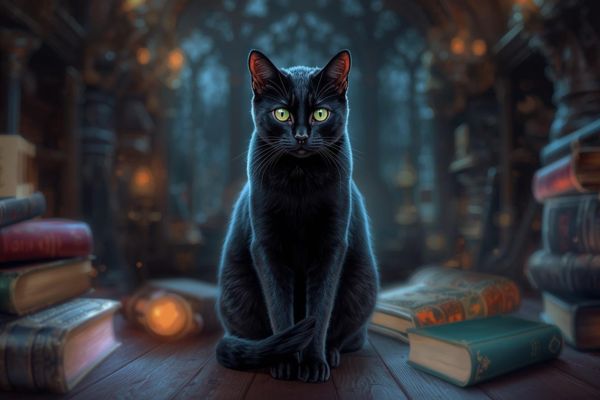
Hey there, beautiful ones. I’m sure you’ve heard it a thousand times: curiosity killed the cat. It gets tossed around so casually, so automatically, that most of us never stopped to question it. But here’s the thing — there’s actually more to that saying than most people know. And I have a feeling the missing piece was left out on purpose.
When Was the Cat Killed?
For me, the cat started dying when I was a little girl.
I was a curious child — the kind who always wanted to know why. Why is this done this way? What’s the point of that rule? How does this make sense if that doesn’t? To me, these were innocent questions. Natural ones. The kind a mind that’s actually alive and engaged asks without thinking twice.
But the answer I got, more often than not, wasn’t an answer at all. It was a shutdown. Curiosity killed the cat. No explanation. No engagement. No real response to what I had actually asked. Just a tidy little phrase that put a lid on my wondering and sent me back to my place — quiet, compliant, and no more curious than I was supposed to be.
Looking back, I understand now what was really happening. But at the time, all I knew was that my questions made people uncomfortable. And so I learned, the way children always learn — through repetition and consequence — that asking too much was somehow dangerous.
Why Was the Cat Killed?
As I got older, I started to notice a pattern. That phrase — curiosity killed the cat — was never used randomly. It only ever appeared when I asked something that truly mattered. Something that pushed past the surface. Something that deserved a real answer.
The adults around me, whether parents, family members, or authority figures, didn’t always have those answers. Or maybe they did and simply didn’t want to give them. Either way, the phrase became a convenient door to close. Don’t go further. Don’t dig deeper. This is not for you to know.
And so many of us stopped asking. Not because we didn’t want to know, but because we were taught — subtly and repeatedly — that curiosity was something to be managed, not encouraged. Even on the rare occasion when a teacher genuinely lit up at our questions and invited us to explore, we hesitated. Because the rest of the world had already told us how that story ends.
The cat always dies.
What Happened After the Cat Was Killed?
Here’s the cost of all that conditioning: we grew up.
And we brought it with us.
We became adults who keep our heads down, who take things at face value, who sense that something isn’t quite right but don’t dare dig deeper because the cat is always killed. We stopped questioning systems, institutions, narratives, and norms that deserved to be questioned. We accepted what we were handed because we had been trained, from childhood, to believe that reaching for more was dangerous.
And then — perhaps the saddest part — we passed it on. We told our own children. We said it to friends. We reinforced without even realizing it the very thing that had kept us small. The phrase became a cycle, moving quietly from one generation to the next, trimming curiosity at the root before it ever had the chance to grow into something powerful.
It is, at its core, a limiting way to live. And we deserved better.
How Do You Bring the Cat Back?
Here is what someone recently shared with me, and I haven’t stopped thinking about it since.
The full saying — the version that somehow got lost along the way — is this: Curiosity killed the cat, but satisfaction brought it back.
The cat came back.
Let that sink in for a moment.
Curiosity was never the villain. The searching, the questioning, the relentless need to understand — yes, it can exhaust you. There will be moments on the path of seeking where you feel worn down, overwhelmed, almost lifeless from the weight of everything you’re trying to understand. But the satisfaction of following a question all the way through? Of actually finding the answer, or at least getting closer to it? That is what brings you back to life. Fuller. Wiser. More yourself than you were before you started asking.
This is what we were robbed of when the saying got cut in half. Not just the second line — but the entire understanding that curiosity is not destruction. It is resurrection.
Be the Cat That Comes Back
When you allow yourself to be curious, the world opens up in ways you cannot imagine from where you’re standing right now. You stop accepting every narrative handed to you and start building your own understanding from the ground up. You branch out. You research. You question. You sit with the discomfort of not knowing and trust yourself to keep going anyway.
You will never know everything — none of us will. But being open enough, brave enough, and hungry enough to keep learning is one of the most powerful things you can do for yourself and for the world around you.
So be curious, beautiful ones. Ask the questions that make people uncomfortable. Look beyond what you’ve been told. Let knowledge stretch and shape the reality you’re living — because on the other side of every question you’re brave enough to ask, there is a version of you waiting to become.
I believe in you. And as always, I love you.
Leave a Reply